Ladin Carnival
Between Ladin comedies, parades, village celebrations and events on the snow, the masks of Val di Fassa bring the most joyful spirit of the Dolomites' Carnival back to life
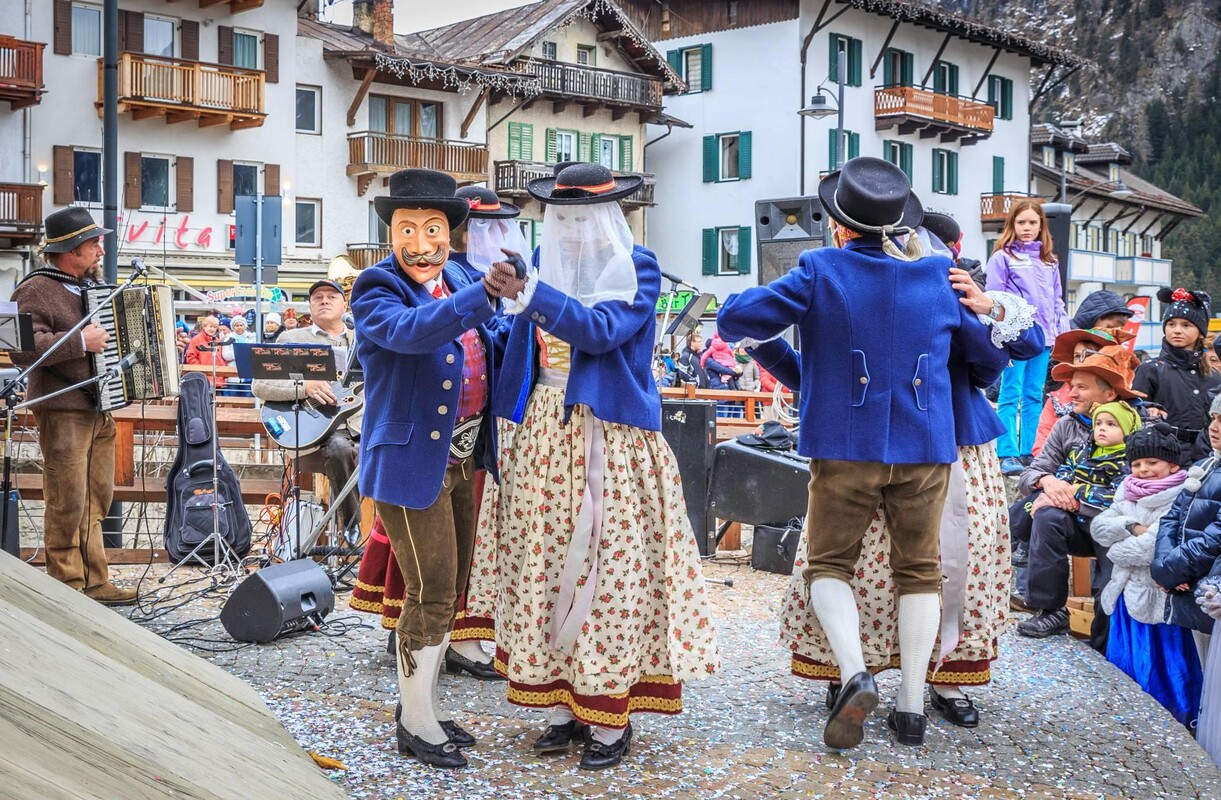
In Val di Fassa, Carnival is not just a celebration: it is a shared ritual of folklore, mischief, theatre and traditions marking the passage from winter to spring. In the past, it was the most eagerly awaited time of the year - a season of laughter and gatherings, and, between February and March, a time when many young couples celebrated their weddings.
At the foot of the Marmolada Glacier, these customs live on thanks to the "Grop de la Mèscres da Dèlba e Penìa", the group that preserves and performs the historic masks of Alba and Penìa. Carnival officially begins on 17 January, on the feast of St Anthony the Abbot, with the traditional Ladin ritual known as "se deslea carnascèr". On 20 January, for St Sebastian's Day, the celebrations move to Penìa, launching a calendar of events that fills the entire valley until Shrove Tuesday. Parades, allegorical floats, village parties, masked balls, torchlight processions and activities on the snow turn the villages into one great stage.
In Penìa, in the former primary school, the much-loved "mascherèdes" return: theatrical performances in the Ladin language, where characters and stories from the past meet the unmistakable humour of Fassa's Carnival.
In the streets, the iconic figures appear - Lachè, Bufon and Marascons - wearing vivid costumes and the unmistakable "faceres", finely carved wooden masks crafted by local artisans.
And between one laugh and the next, the aromas of tradition are never far away: grostoi, fortaes and grafons, typical sweets that are as much a part of the festivities as the masks themselves.
The full programme of events will be available at the end of January.